New Drop is Live — 260 GSM Supima Cotton, Oversized Tees Starting at ₹1,299.
LURI Supima

Fabric Quality & Lab Reports

Every LURI tee is cut from Supima cotton knit and tested by independent, NABL-accredited laboratories. These are the actual results — colour fastness, shrinkage, spirality and fabric weight — with the report numbers to match.

260 g/m²
Tested GSM
4–5
Colour fastness grade
≈ 0
Spirality after wash
2
Independent labs
The fabric

What is Supima cotton?

Supima is a registered trademark of the Superior Pima Association, used only for extra-long staple (ELS) cotton grown in the United States. It is not a marketing adjective — it is a controlled, traceable designation with a licensing chain behind it.

The difference is fibre length. ELS fibres measure at least 34 mm, against roughly 20–28 mm for the standard upland cotton used in most t-shirts. Longer fibres spin into finer, stronger yarn with fewer loose ends at the fabric surface. Fewer loose ends means less pilling, a smoother hand, and more even dye uptake — which is exactly what shows up in the colour fastness results further down this page.

Standard upland cottonSupima (ELS)
Fibre length≈ 20–28 mm34 mm and above
SurfaceMore protruding fibre endsSmoother, fewer ends
Pilling tendencyHigherLower
Dye uptakeLess evenMore even, deeper shade retention
Where it’s grownWorldwideUnited States only — CA, AZ, NM, TX
Share of world cropThe large majorityUnder 1%
Weight

What does 260 GSM actually feel like?

GSM is grams per square metre — how much one square metre of the fabric weighs. It is the single most useful number on a t-shirt spec sheet, and the one most brands leave out.

LURI’s knit tests at approximately 260 g/m² under ISO 3801. That weight is what lets an oversized, drop-shoulder cut fall away from the body instead of clinging to it, and it is why the fabric does not read as thin or see-through.

Where 260 sits

WeightWhat it is
120–150 GSMLightweight fast-fashion tee — often semi-sheer
180–200 GSMStandard mid-weight retail tee
240–280 GSMHeavyweight — holds a structured silhouette
Who tests it

Our testing partners

LURI does not self-certify its fabric. Testing is carried out by two independent textile laboratories in Tamil Nadu, India, on production lots — not on samples prepared specially for testing.

SITRA

The South India Textile Research Association

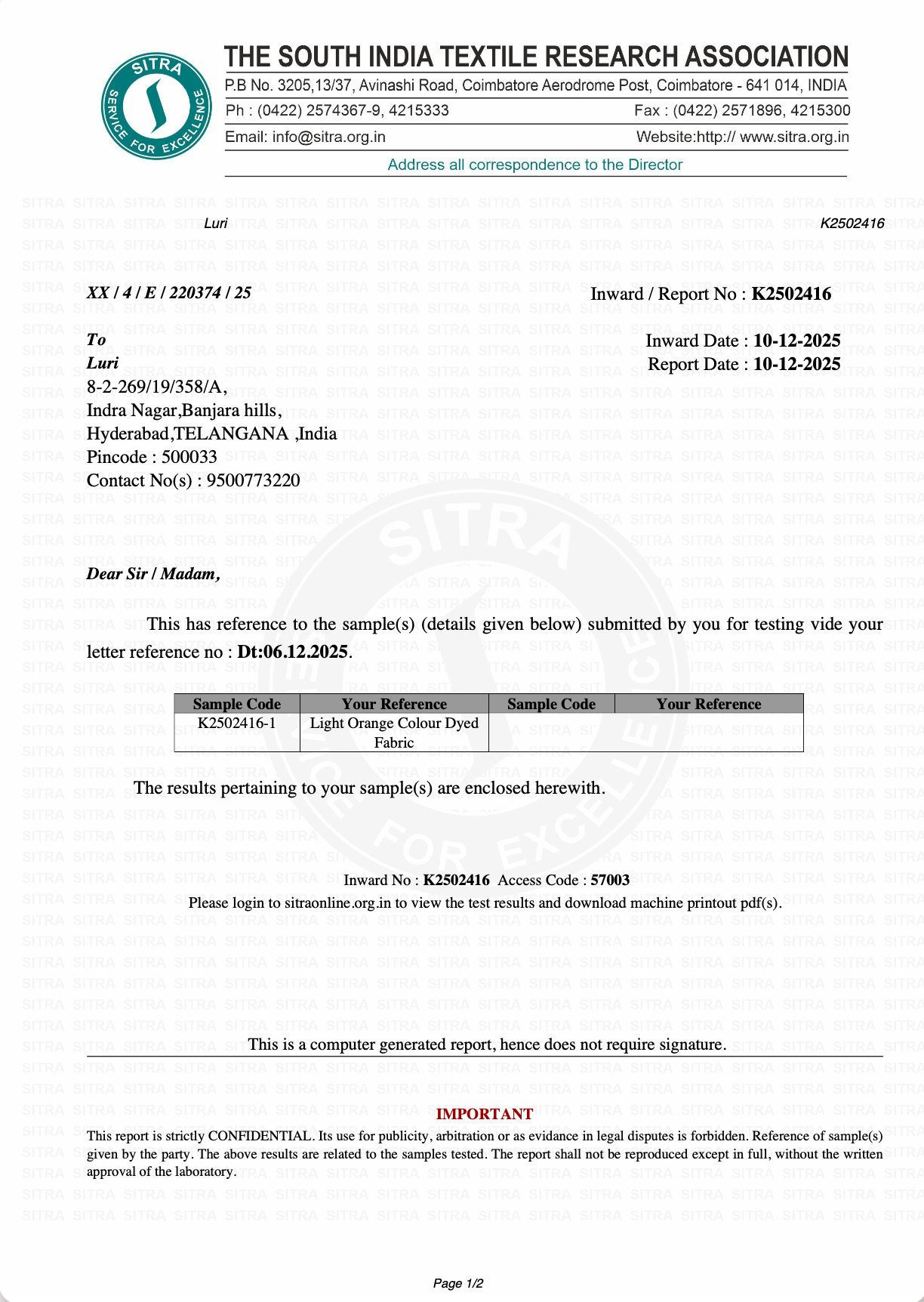
A NABL-accredited textile research laboratory. SITRA tests LURI fabric for colour fastness, spirality and shrinkage.

Report Nos.
N2506284  ·  K2502416

SPR

SPR Consumer Products Services, Tiruppur

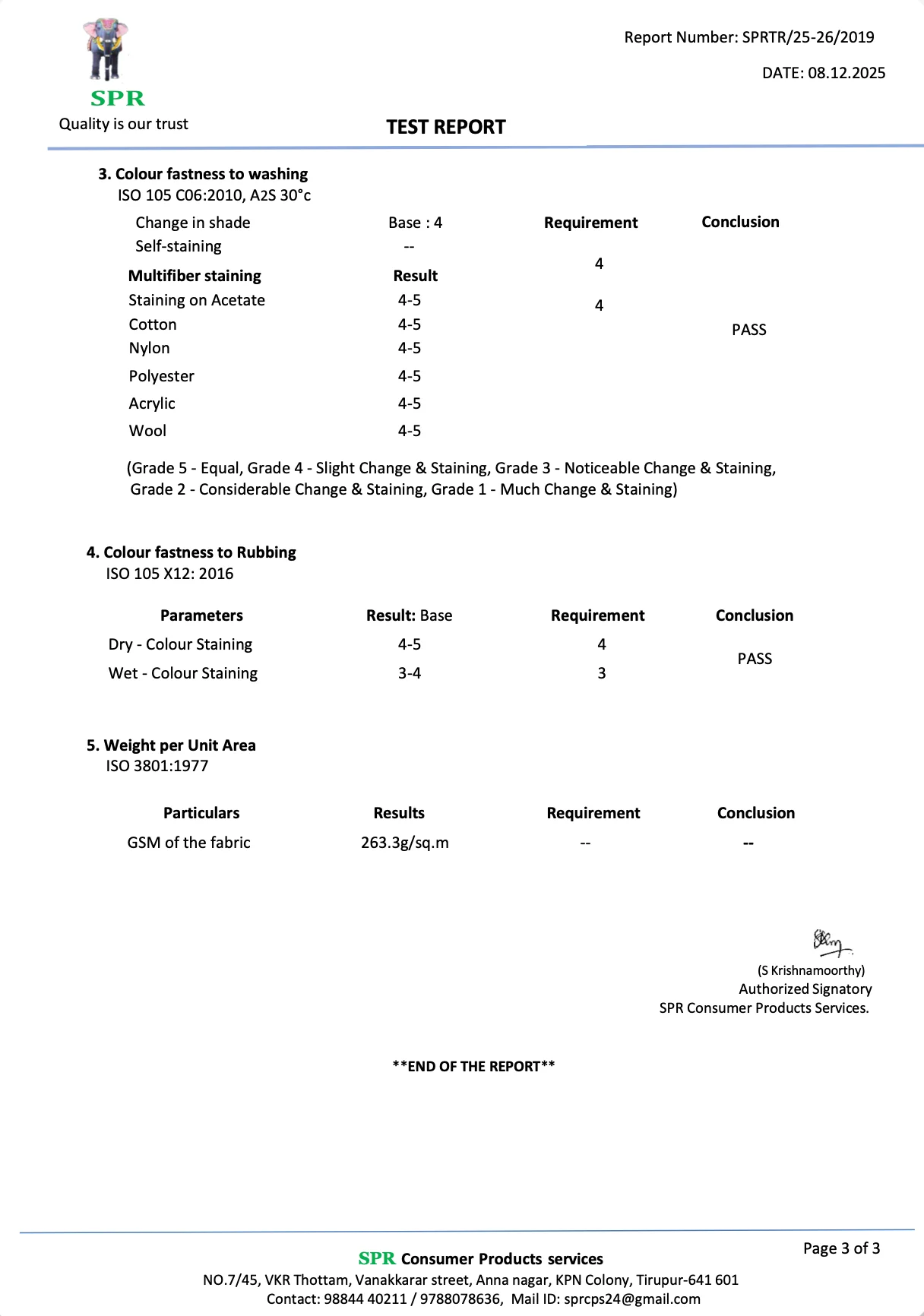
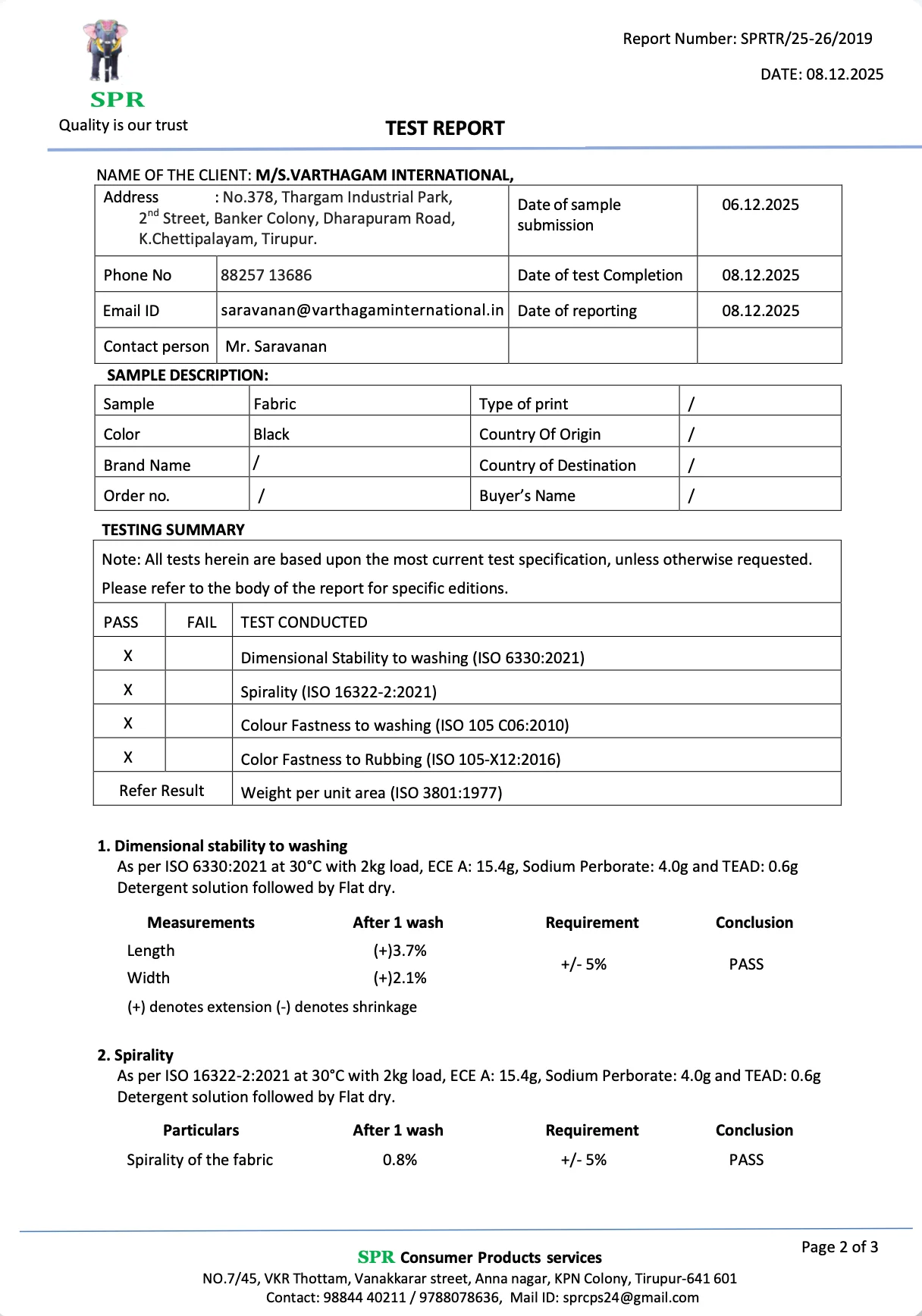
Tests our production lots for dimensional stability, spirality, colour fastness and GSM (fabric weight).

Report No.
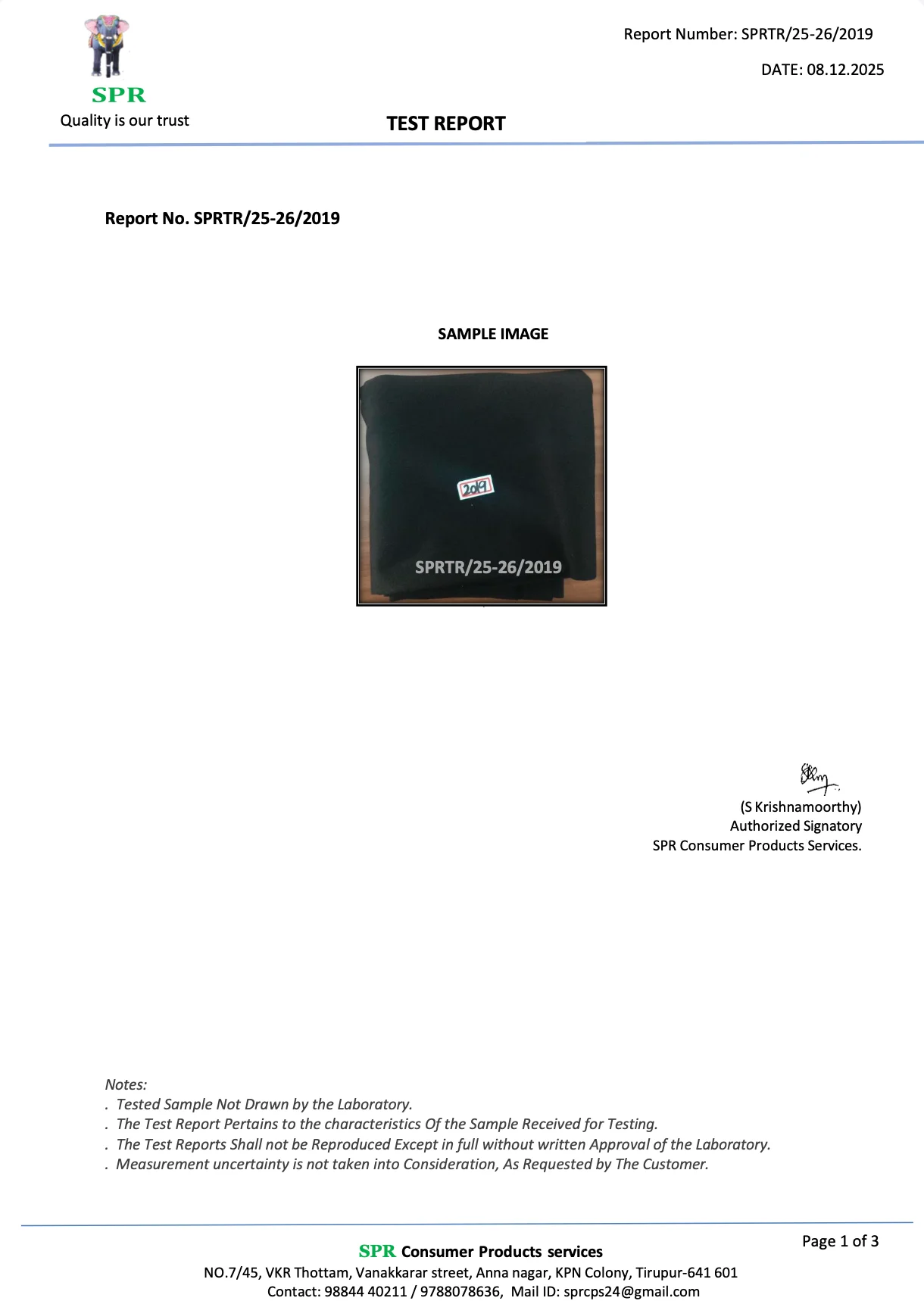
SPRTR25-262019

The results

What we test for

Three things decide whether a heavyweight tee still looks like itself a year in: whether the colour holds, whether the shape holds, and how much fabric is actually there.

Colour fastness

Shrinkage & spirality

Fabric weight

Methods

Test methods & standards

All testing is performed under recognised ISO and IS methods, so the results are comparable against any other lab report using the same standards.

StandardWhat it measures
ISO 105 X12Colour fastness to rubbing (crocking), dry and wet
ISO 105 C10 / C06Colour fastness to domestic and commercial laundering
ISO 105 B02Colour fastness to artificial light
ISO 105 E01 / E04Colour fastness to water and to perspiration
ISO 6330Domestic wash and dry procedures for textile testing
ISO 16322-2Spirality — twisting after laundering
ISO 3801Fabric mass per unit area (GSM)

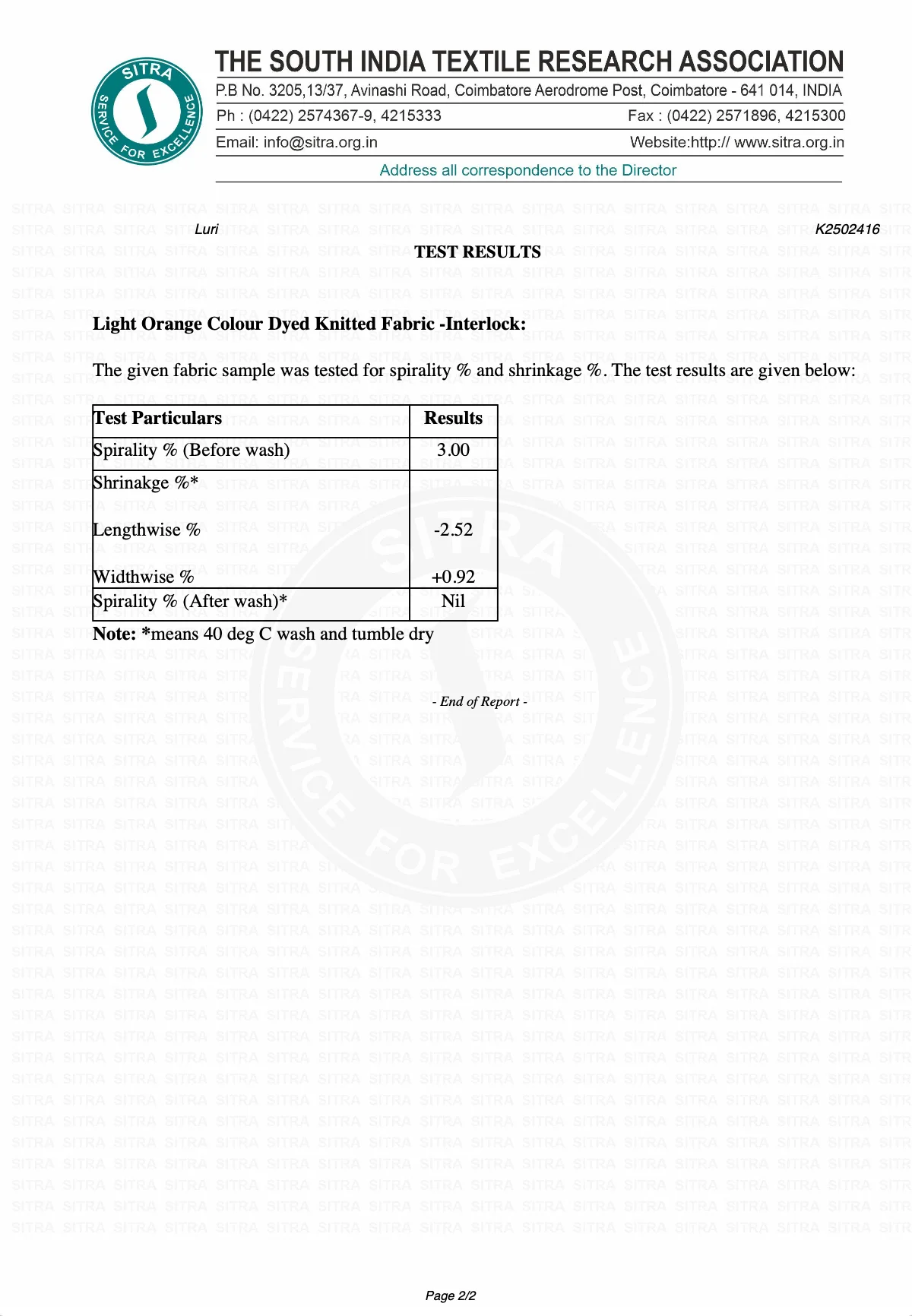
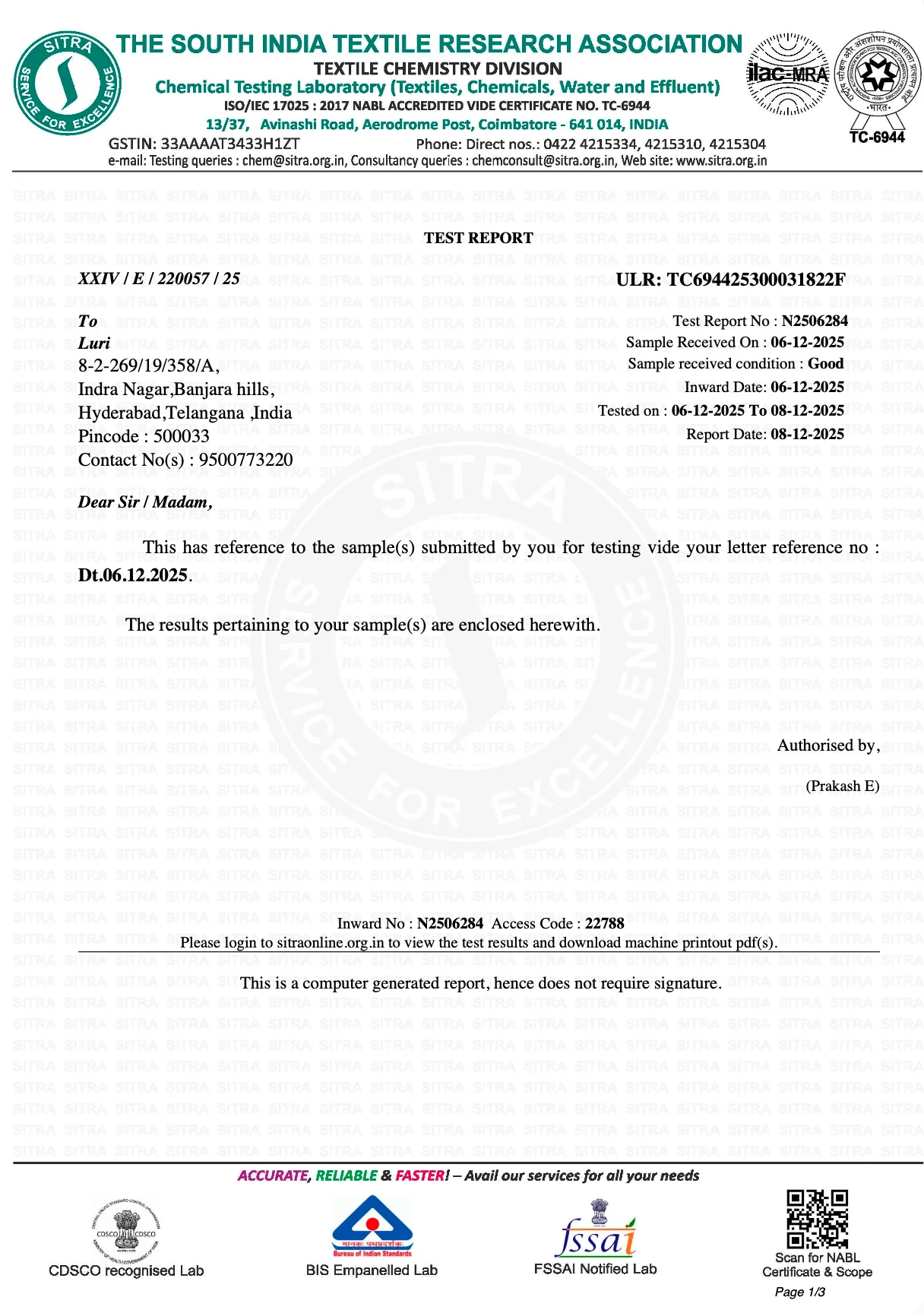
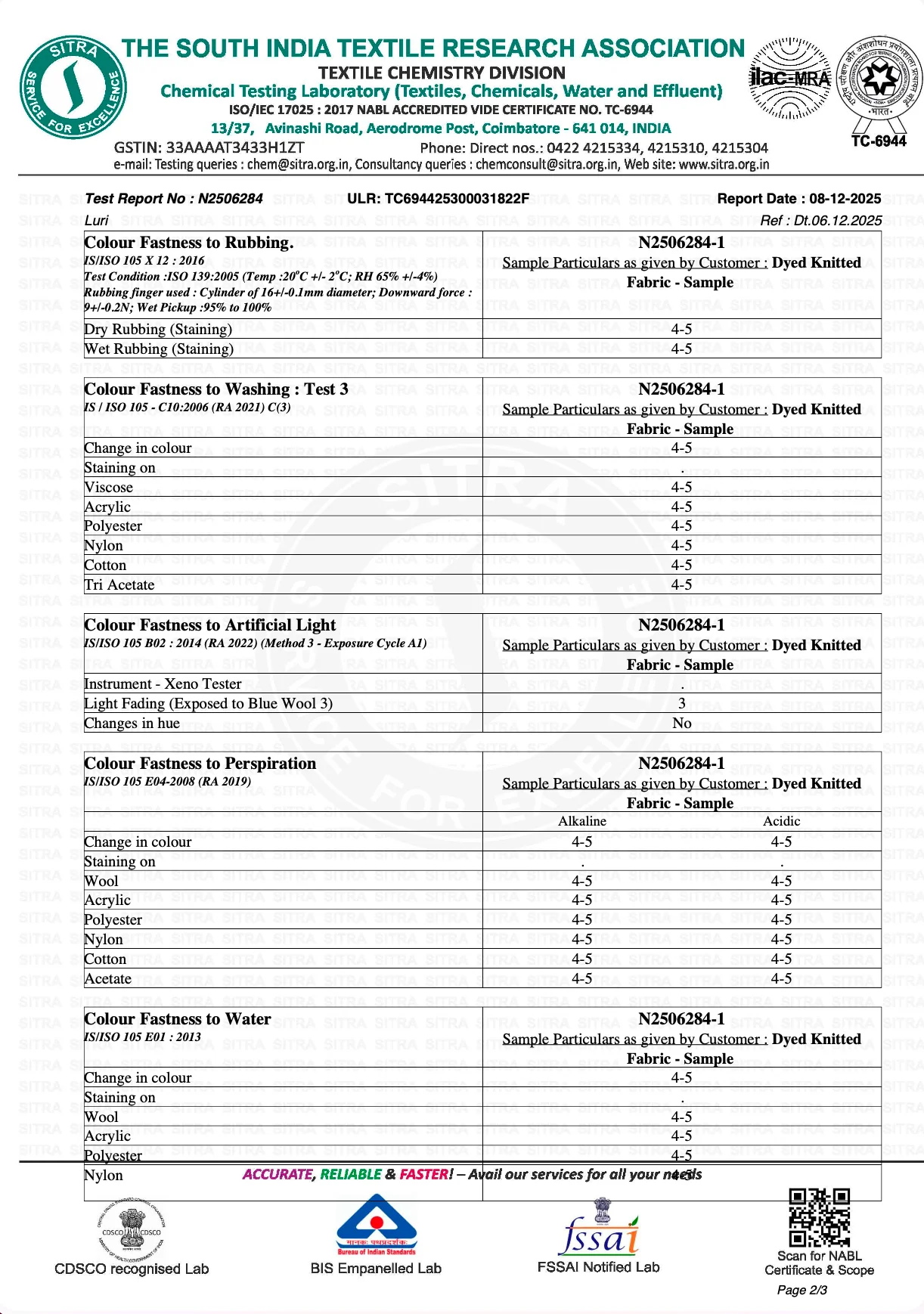
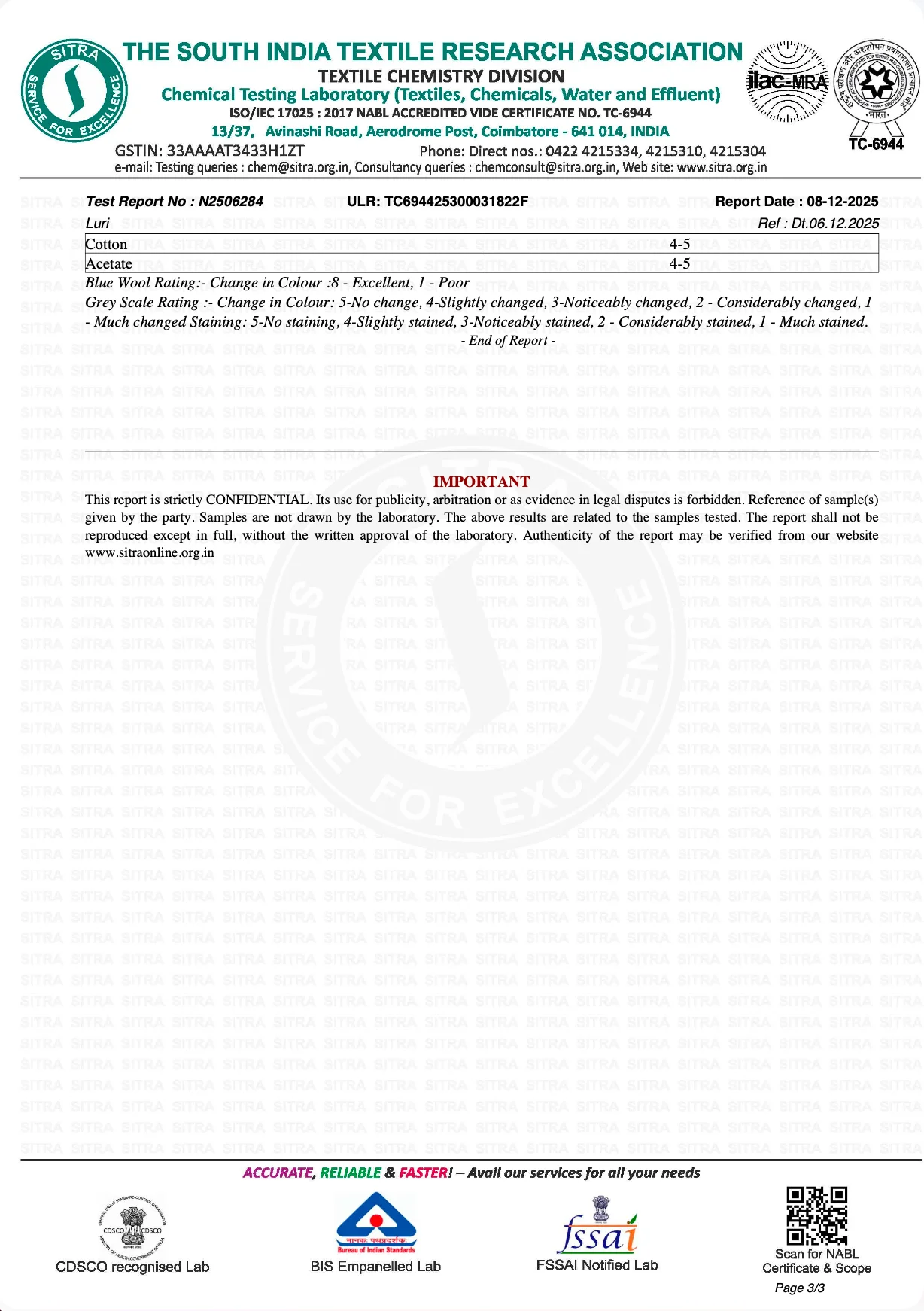
Tested by SITRA (Report Nos. N2506284 and K2502416) and SPR Consumer Products Services (Report No. SPRTR25-262019) for colour fastness, shrinkage, spirality and GSM.

In plain language

What the reports mean for the tee you wear

Stays true to shade

Grade 4–5 results across washing, rubbing, light, perspiration and water mean the garment holds its original colour far longer than a conventionally dyed tee.

Holds its shape after wash

Controlled shrinkage and near-zero spirality keep necklines, hems and side seams straight — no twisted side seam after the third wash.

Reads premium on skin

Heavier GSM with a soft-hand finish gives a structured drape that is neither thin nor see-through, and does not collapse over time.

Documentation

View the certifications

The original lab reports, unedited. Click any report to open it full size.

SITRA — The South India Textile Research Association

SITRA test report — Report No. N2506284
SITRA test report — page 2
SITRA test report — Report No. K2502416
LURI Test repports
SITRA test report — Report No. N2506284
SITRA test report — page 2

SPR Consumer Products Services

SPR test report — Report No. SPRTR25-262019, page 1
SPR test report — page 2
SPR test report — page 3
The label

About LURI

LURI is an oversized graphic t-shirt label based in Banjara Hills, Hyderabad. The premise is narrow on purpose: one silhouette, one fabric, done properly.

That silhouette is a boxy, drop-shoulder oversized cut. That fabric is Supima cotton knit at roughly 260 GSM — heavy enough to hold the shape the cut is designed for. Graphics are released in themed collections rather than as an endless catalogue: Anime, Marvel, Venom, Wild Life, Travel, Typography, and Plain for the ones who want the fabric without the print.

The reason this page exists is simple. You cannot feel a fabric through a screen, and “premium cotton” is a phrase anyone can type. Report numbers are harder to fake, so we publish them.

Questions

Frequently asked

What cotton are LURI t-shirts made from?

LURI tees are made from Supima cotton — extra-long staple cotton grown in the United States under the Superior Pima Association trademark. It accounts for under 1% of world cotton production. The fibre measures 34 mm and above, against roughly 20–28 mm for the standard upland cotton used in most t-shirts.

What GSM are LURI t-shirts?

Approximately 260 g/m², tested under ISO 3801. That places the fabric in the heavyweight band — well above the 180–200 GSM of a standard retail tee, and roughly double a 120–150 GSM fast-fashion tee.

Will my LURI t-shirt shrink after washing?

Shrinkage was measured under ISO 6330 wash testing and falls within the accepted textile tolerance band for both length and width. Spirality — the twisting that pulls side seams out of line — measures close to zero after wash. Wash cold and the garment keeps its size and its shape.

Will the colour fade or transfer?

Colour fastness tested at grade 4–5 on a 1–5 scale across rubbing (dry and wet), domestic washing, light, perspiration and water, where 5 is the best possible result. In practice that means minimal to no colour transfer onto other garments or skin, and shade retention through repeated washes.

Who carried out the testing?

Two independent laboratories. SITRA (The South India Textile Research Association), a NABL-accredited textile laboratory, under Report Nos. N2506284 and K2502416. And SPR Consumer Products Services, Tiruppur, under Report No. SPRTR25-262019. Testing is done on production lots, not on specially prepared samples.

How should I wash and care for it?

Machine wash cold, inside out, with a mild detergent and similar colours. No bleach. Tumble dry low or line dry in shade. Iron on the reverse and avoid ironing directly over the print. Heavyweight knit holds its shape best when it is not wrung out or dried in direct sun.

The spec sheet is the pitch.

260 GSM Supima cotton, oversized drop-shoulder fit, tested by two independent labs. Pick a print.

Questions about fabric or bulk orders? Talk to us.

Shopping Cart0

No products in the cart.

Shopping Cart0

No products in the cart.